
Reviewed · POTTERY & AVANOS WORKSHOPS
Visit to Cappadocia ceramic workshop and carpet store
Your hands will get a little dusty.
This Cappadocia ceramic and carpet workshop experience mixes two traditional crafts—women’s carpet weaving and pottery—so you see how items are made, not just how they’re displayed.
I love that you get a chance at pottery making yourself, not only watching a demonstration. I also like the women’s co-operative carpet workshop angle, because it explains the craft and why buying matters.
One thing to consider: the hands-on pottery part can vary by day and situation, so if you really want to make something, it’s smart to confirm you’ll get the chance during your visit.
In This Review
- Key highlights worth your time
- Cappadocia crafts, explained through trade routes and local clay
- Women’s carpet co-operative: what weaving teaches you (and why it’s different)
- A small shopping reality check
- Pottery workshop: red-and-white clay and the hands-on part
- How to make the most of your try-making time
- Buying ceramics and carpets without losing your head
- Timing, transport, and the private-group feel
- Value for $30: what you get and what you should watch
- Who this workshop tour suits best
- Should you book this Cappadocia ceramic and carpet workshop?
- FAQ
- How long is the Cappadocia ceramic workshop and carpet store visit?
- What is the price per person?
- Do you get to make pottery, or is it only a demonstration?
- Is carpet weaving part of the experience?
- Is this tour private?
- What languages are available with the host or greeter?
Key highlights worth your time
- Women’s co-op weaving you can watch up close while you learn how skills get passed along
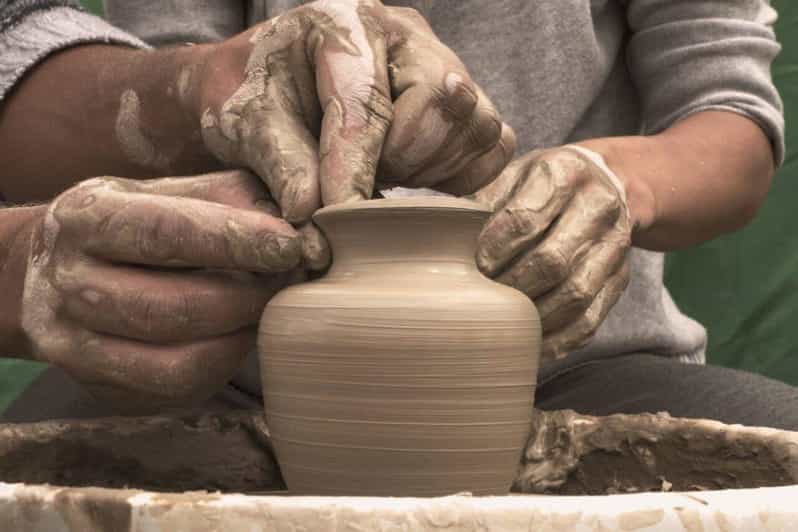
- Hands-on pottery included in the visit (try-making is part of the experience)
- Cappadocia-specific ceramics in regional styles and colors after the demo
- Shopping with guidance so you can focus on quality and avoid common buying mistakes
- Private-group feel with car pickup and drop-off that keeps things easy
Cappadocia crafts, explained through trade routes and local clay
Cappadocia sits on the famous Silk Road, and that matters because it helps explain why the area is so good at crafts and trade. Over centuries, people including Hittites, Assyrians, Greeks, Arabs, Jews, and Turks were all moving through this region, bringing ideas and buying goods. The result: you get workshops where products aren’t just souvenirs; they’re the kinds of items that used to pay for travel, business, and family survival.
On this tour, you’ll see that craft “ecosystem” in two different forms. One stop centers on textiles and weaving through a women’s co-operative. The other centers on pottery traditions tied to local materials—especially the clay sources they point out during the visit.
If you like shopping, this is also a nice way to shop with context. Instead of walking into a store cold, you see how the work is done first, then you can judge what you’re looking at while you shop afterward (or while you’re deciding whether to buy).
At the wheel in Avanos
- Visit to Cappadocia ceramic workshop and carpet store★ 4.6 · 19 reviews
- Cappadocia: Red Tour with Lunch & Pottery Demonstration★ 4.5 · 5 reviews
- CAPPADOCIA : Traditional Local Carpet Weaving Tour★ 4.3 · 3 reviews
Women’s carpet co-operative: what weaving teaches you (and why it’s different)
The carpet workshop is the part that often makes people feel they’re doing more than buying decor. You’ll visit a women’s co-operative carpet workshop and watch the weaving process. It’s not presented as a mystery craft behind glass; you see the daily work and the skill it takes to make something durable and beautiful.
The most practical takeaway here is understanding how the co-operative model works. In Turkey, women contribute less to the economy than men, and co-operatives help change that by providing a path to financial independence and self-confidence. They also keep knowledge from getting lost—skills learned in the workshop are passed along to the next generation.
You can think of it as craft plus livelihood, not just craft. And that affects how the shop conversation goes. You’re less likely to feel like you’re being rushed or sold to without meaning. If you buy, your purchase is directly tied to a system designed to support the women doing the work.
A small shopping reality check
Carpets are one of those purchases where buyers sometimes worry about two things: whether they’re getting a genuine piece or whether they’re paying too much. This visit is designed to reduce that stress by steering you toward reputable, trustworthy people. Still, your best tool is your own attention—watch the weaving, ask questions about what you’re seeing, and don’t let the moment bully you into a decision.
Pottery workshop: red-and-white clay and the hands-on part
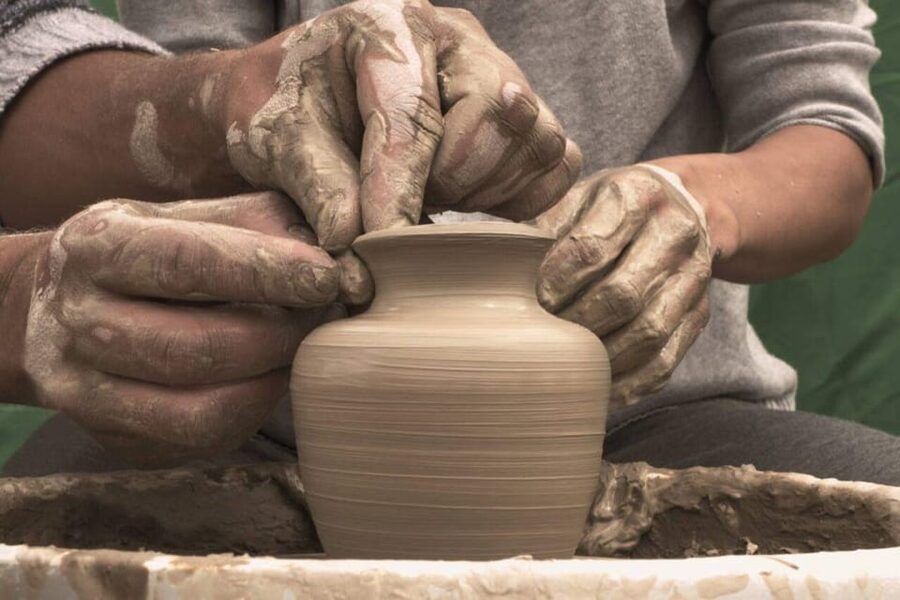
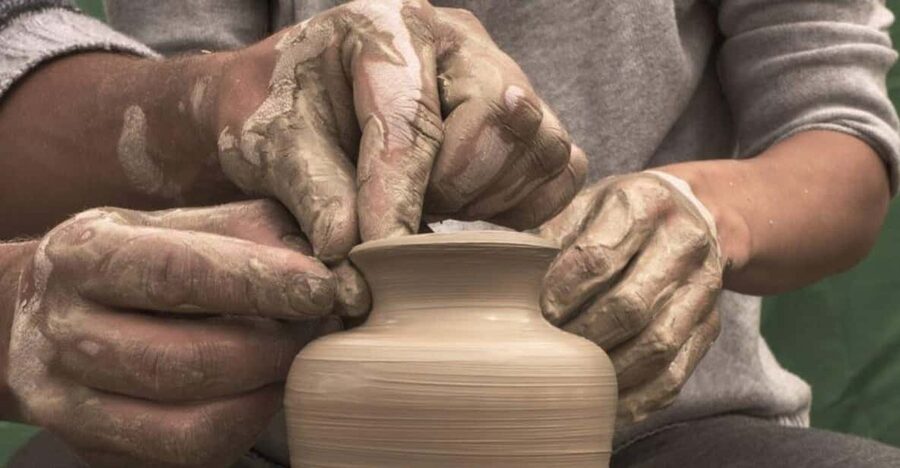
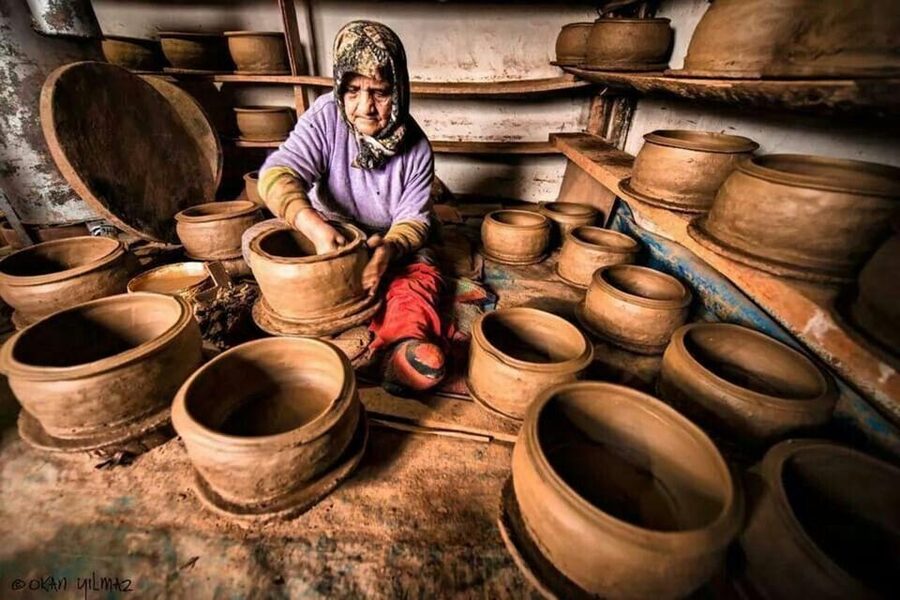
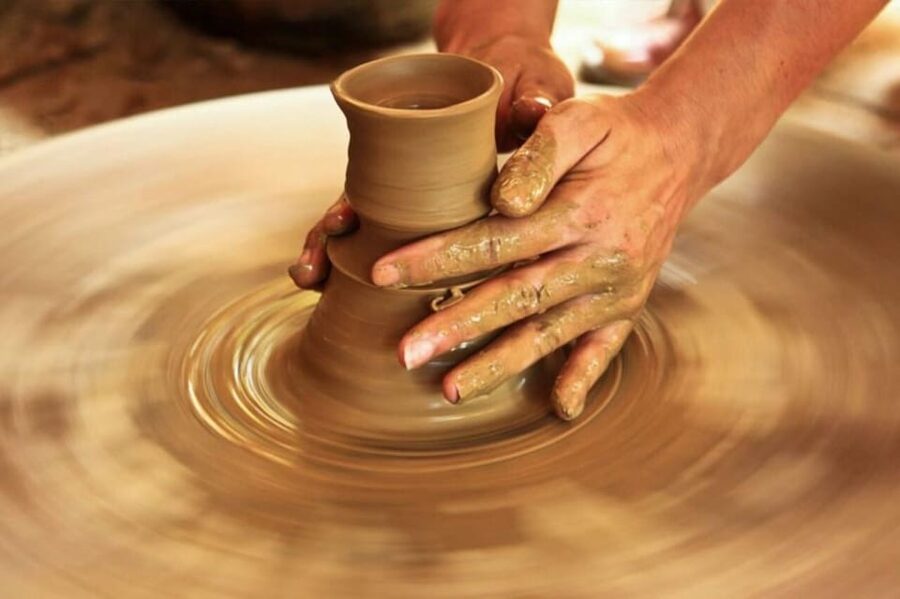
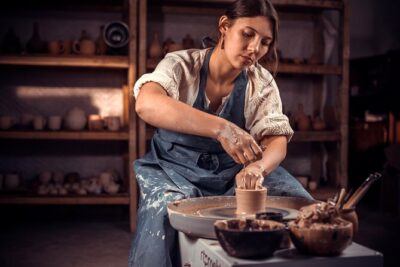
Then comes pottery, and it’s a great contrast: textiles are slow and rhythmic, while pottery feels more immediate and physical. You’ll see a demonstration of how a ceramic piece is made, and the tour also gives you the chance to try making pottery. The hands-on try-making part is described as costing nothing, which is a big value add if you’ve ever wanted to get involved but didn’t want to pay extra for a class.
The workshop explanation includes some striking material details. They describe red clay coming from the Red River, which is said to be about 1355 km long, and white clay from rocky parts of Cappadocia. They also mention that pottery art in Anatolia goes back to around 1750 BC with the Hittites. Even if you treat dates and origins as broad storytelling, the key point is clear: the technique is tied to place.
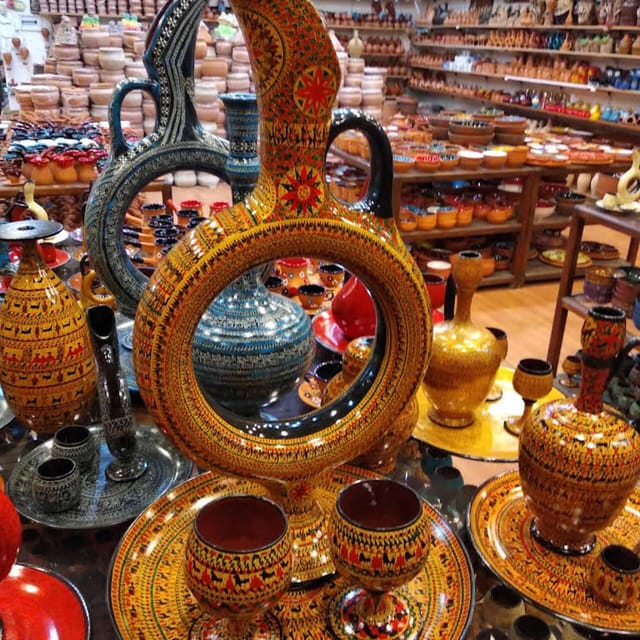
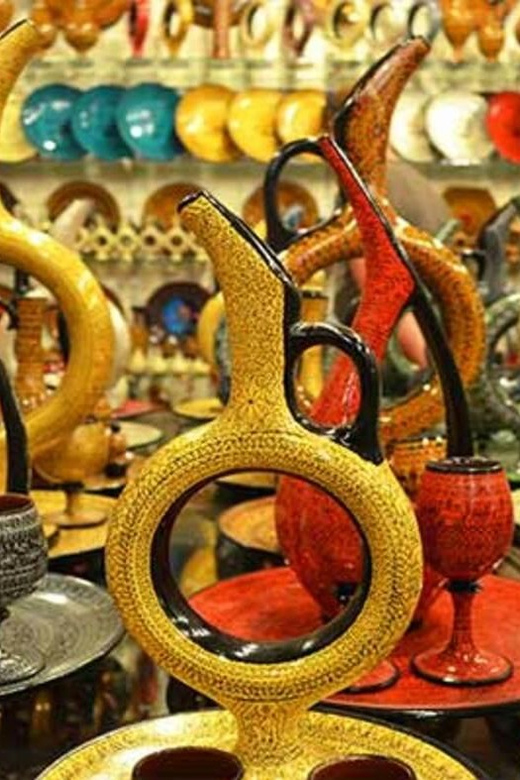
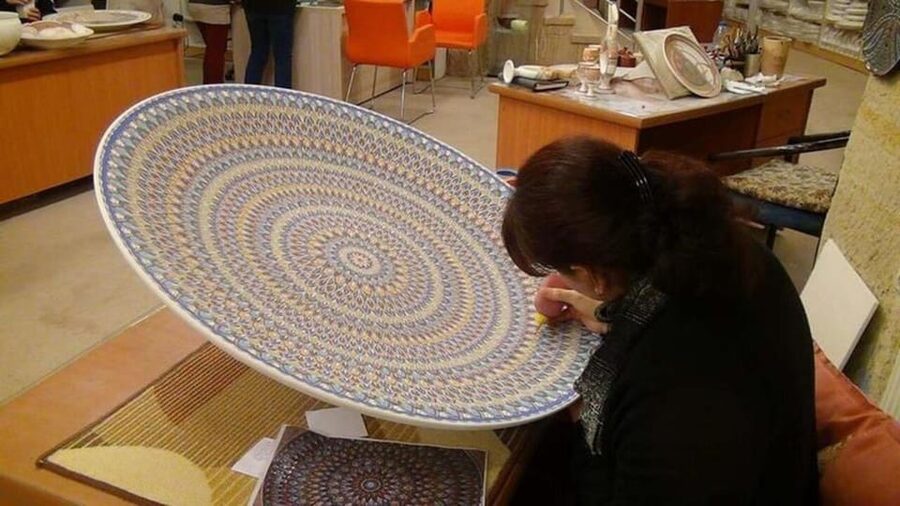
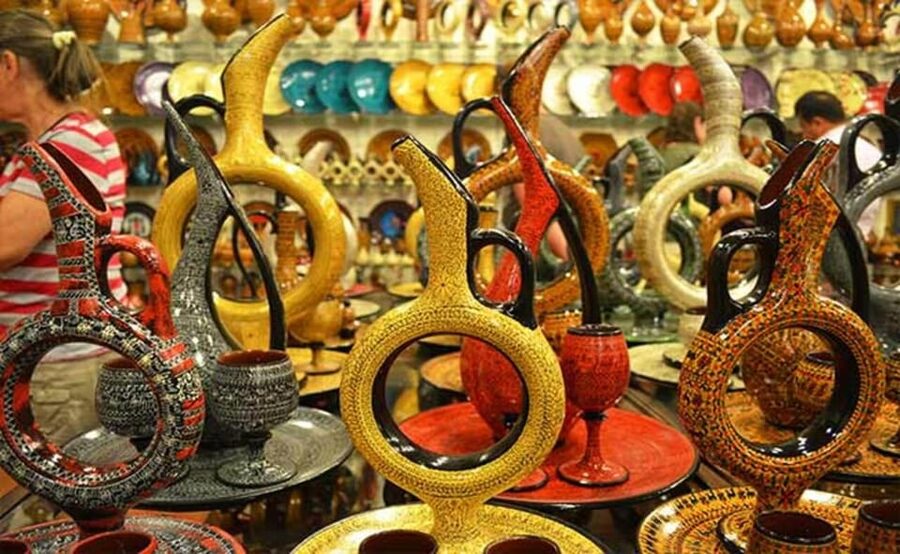
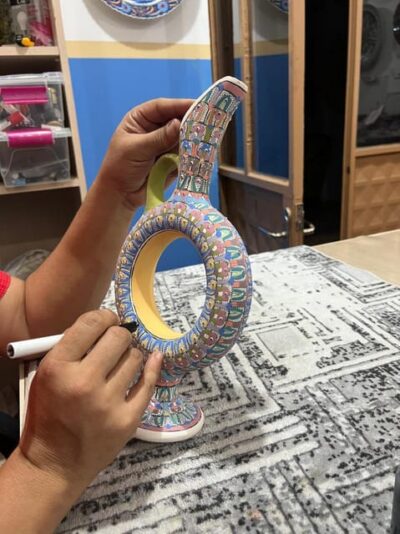
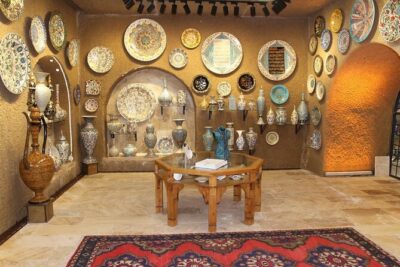
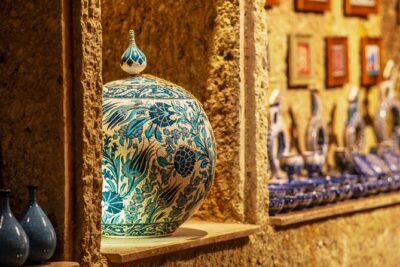
After the demonstration, you’re shown hand-made pieces of pottery and ceramics specific to the region—styles and colors that match what Cappadocia is known for. This is where you can connect what you just watched to what you’re considering buying. You’ll have a better sense of what might take longer, what looks more careful up close, and what feels like it has real craft behind it.
How to make the most of your try-making time
If you want the pottery part to feel worthwhile, go in with a simple mindset: you’re not trying to produce a perfect bowl. You’re trying to understand the steps—shaping, handling, and how the clay responds. Expect it to be messy. Your thumb might end up with a tiny clay fingerprint you’ll be proud of later.
Further afield across Turkey



Buying ceramics and carpets without losing your head
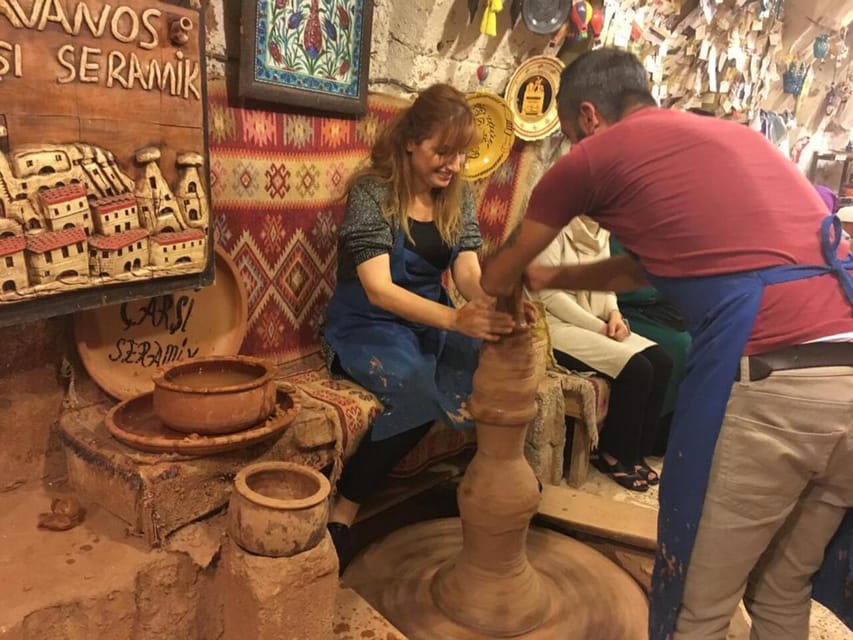
This tour works especially well if you enjoy shopping but want to avoid the common traps. Two traps are typical in craft shopping anywhere: overpaying due to pressure, and buying something that doesn’t match what you think you’re buying. The structure of this experience is built to reduce both.
For carpets, the co-operative setting helps because you’re seeing the people and the process tied together. The explanation also flags the issue of fakes and pricing concerns, and the visit is positioned around guiding you toward the more reputable and trustworthy sellers.
For pottery, the best advantage is knowledge. When you see the demonstration and (ideally) try making something yourself, you start noticing details you’d normally miss. Does the color look consistent? Do the shapes look evenly made? Does it seem like it was shaped carefully rather than quickly? You’re not becoming an expert overnight, but you’re gaining enough context to shop smarter.
Also, keep expectations realistic about what a 2.5-hour workshop-style visit can do. If you want a deep, hour-by-hour comparison of every product in the region, you’ll likely want more time. But if your goal is to experience the craft and make a confident purchase decision, this fits well.
Timing, transport, and the private-group feel
The experience runs about 2.5 hours, which is a manageable block when you’re visiting Cappadocia and trying to balance it with other major sights. You’re picked up and dropped off by car with a driver, so you’re not spending your time figuring out logistics on the day.
It’s also described as a private group, meaning you’re not stuck in a large crowd moving at the pace of everyone else. In at least one instance tied to the experience, the driver Mehmet was singled out as exceptionally friendly and easy to talk to. That kind of rapport matters here because you’ll get more out of the visit when you can ask questions comfortably.
Language support is broad, with host/greeter options listed in Chinese, English, French, Italian, Japanese, Portuguese, Spanish, Turkish, Russian. If you’re worried about communication, you’ll usually find a language that works well enough for the core parts: the demonstrations, the explanations, and the basic shopping questions.
Value for $30: what you get and what you should watch
At around $30 per person, the value comes from three bundled pieces: car/driver with pickup and drop-off, the ceramic experience, and pottery-making try time. If you’ve paid for workshop-style experiences before, you know hands-on time is where the money usually goes. Here, pottery-making is part of what’s included, and the visit is short enough that it doesn’t feel like you’re stuck all day.
The carpet weaving portion is also a real part of the experience, not just a quick photo stop. You’ll watch women weave and get the co-operative context, which is one reason the tour feels more meaningful than a standard store circuit.
The main value risk is the one you should handle early: hands-on pottery may not happen the way you expect. One booking experience described missing the hands-on part and instead getting mostly a shop demonstration and discussion about pricing. That doesn’t mean it happens every time, but it does mean you should confirm what you’ll do during your session—especially if pottery try-making is your priority.
Who this workshop tour suits best
This is a strong fit if you:
- Want to see craft production with explanations while you’re in Cappadocia
- Like the idea of trying pottery instead of only watching
- Enjoy shopping but would prefer guidance through reputable workshop partners
- Want a short, organized activity that doesn’t steal your entire day
It might be less ideal if you:
- Only care about pottery and feel disappointed when the carpet stop takes equal time
- Need a guaranteed, highly structured pottery class format (this experience is workshop-style and time-limited)
- Are extremely price-sensitive and want a guaranteed bargain without any discussion at all
Should you book this Cappadocia ceramic and carpet workshop?
I’d book it if your goal is to experience two major local crafts in a single short visit, learn how carpets and ceramics connect to community life and materials, and end up with either a memory or a purchase you understand better. At 2.5 hours and with pickup/drop-off plus pottery try-making, it’s good value for the time you spend.
Book with extra care if you’re counting on pottery making as the centerpiece. When you reserve, ask directly whether you’ll definitely get hands-on pottery time during your visit, and go in ready to get a little messy. If the hands-on part is confirmed, this is one of those Cappadocia experiences that feels personal, practical, and rooted in how local crafts actually work.
FAQ
How long is the Cappadocia ceramic workshop and carpet store visit?
The duration is listed as 2.5 hours.
What is the price per person?
The price is $30 per person.
Do you get to make pottery, or is it only a demonstration?
Pottery making is included, and you can also try making pottery during the visit. It’s described as costing nothing if you want to give it a shot.
Is carpet weaving part of the experience?
Yes. You visit a women’s co-operative carpet workshop and watch women weave carpets.
Is this tour private?
It’s listed as a private group.
What languages are available with the host or greeter?
Languages listed are Chinese, English, French, Italian, Japanese, Portuguese, Spanish, Turkish, and Russian.
More Tour Reviews in Cappadocia
- Cappadocia: Goreme Hot Air Balloon Flight at Sunrise
★ 5.0 · 4,924 reviews - Full Day Cappadocia Red and Green Combined Day Tour
★ 4.6 · 3,391 reviews - Cappadocia: Sunset or Daytime ATV Adventure Tour
★ 4.8 · 2,397 reviews - Cappadocia: Goreme Hot Air Balloon Flight Over Fairychimneys
★ 4.8 · 2,347 reviews - Cappadocia: Sunrise Hot Air Balloon in Göreme and Transfer
★ 4.9 · 1,802 reviews - Cappadocia: Horse Riding Tour with Sunrise or Sunset Options
★ 4.8 · 1,377 reviews
More Grand Tours Beyond Cappadocia
- From Istanbul: 3-Day Cappadocia Highlights Tour by Plane
★ 4.5 · 22 reviews - From Cappadocia: 2-Night Nemrut, Sanliurfa, and Harran Tour
★ 5.0 · 4 reviews - Istanbul: 2-Day Trip to Cappadocia with Flights & Lunchs
★ 3.7 · 3 reviews
More Pottery Workshops in Avanos
- Cappadocia: Authentic Pottery Workshop Experience
★ 4.9 · 241 reviews - Cappadocia: Red Tour with Lunch & Pottery Demonstration
★ 4.5 · 5 reviews - CAPPADOCIA : Traditional Local Carpet Weaving Tour
★ 4.3 · 3 reviews
Fresh off the valley trail: our newest Cappadocia write-ups





Pottery & Avanos Workshops, compared.
 ★ 5.0Historical Pottery Making in CappadociaFrom $13261 reviews
 ★ 4.9Authentic Pottery Workshop ExperienceFrom $25241 reviews
 ★ 4.8Avanos: Pottery Workshop with Clay Making ExperienceFrom $22233 reviews
 ★ 5.0Pottery Workshop ClassFrom $10191 reviews
 ★ 4.9Hidden Underground City & Pottery Tour W/ticketFrom $16115 reviews
 ★ 3.3Pottery WorkshopFrom $1241 reviews
 ★ 5.0Private Pottery Making CourseFrom $1932 reviews
 ★ 4.4Avanos: Turkish Music and Dance Show with Dinner & DrinksFrom $6724 reviews
Browse the lists this tour appears in