
Turkey’s highlights, stitched into one guided route. This Grand Tour is interesting because it strings together some of Turkey’s biggest sights with steady guidance, so you spend less time figuring out logistics and more time actually seeing.
I particularly like how clearly Cappadocia is structured, with top viewpoints plus churches, valleys, and even an underground city. I also like the human touch: guides such as Rosa and driver Fero are specifically praised for careful pacing, professionalism, and storytelling that makes the sites click.
One thing to consider: it’s a fast-moving itinerary. Even with great context, some stops are brief (think panoramas at 10–20 minutes), so if you love long, slow wandering, you’ll want to adjust your expectations and keep your energy up.
In This Review
- Key things that make this tour work
- Entering Cappadocia from Göreme Panorama to Uçhisar
- Cappadocia beyond the postcard: valleys, monasteries, and Kaymaklı
- Sultanhanı and Konya: the Silk Road stop and Rumi’s center
- Roman ruins on the Turkish Riviera: Perge, Side, and Aspendos
- Kaş, Myra, and Termessos: Lycian sites with a mountain edge
- Pamukkale and Hierapolis: white terraces plus Roman spa city
- Ephesus and the Christian sites near Selçuk
- Pergamon and Bergama: acropolis views and Asclepius medicine
- Istanbul Old City in two big blocks: Hagia Sophia, Topkapı, and the Bosphorus
- Price and logistics: what $7,689.02 buys you here
- Should you book this Grand Tour of Turkey?
- FAQ
- Is pickup offered for this tour?
- What language is the tour guide using?
- Is this a private tour?
- Where does the tour start and where does it end?
- Is a mobile ticket provided?
- How long is the tour?
- What’s included in the price?
- What is not included?
- What kind of fitness level do I need?
- Can I cancel and get a full refund?
- What if my hotel or flight changes last minute?
Key things that make this tour work
- Private group touring: only your group participates, so the day feels smoother and more personal.
- Cappadocia coverage that’s hard to replicate alone: Göreme, Paşabağ, valleys, and Kaymaklı underground.
- Ancient sites that actually connect: Roman, Lycian, Byzantine, and Hellenistic places are grouped in a logical arc.
- Big Istanbul hits without a scramble: Hagia Sophia, Blue Mosque, Topkapı, and Grand Bazaar.
- Value in what’s handled for you: air-conditioned transport, parking fees, professional guiding, and many entrances plus lunch are included.
- Fast pacing: you’ll see a lot, but not every stop is “all day.”
Entering Cappadocia from Göreme Panorama to Uçhisar
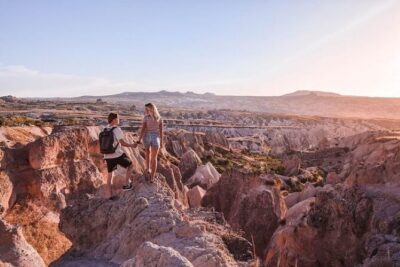
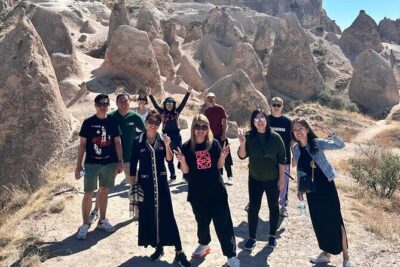
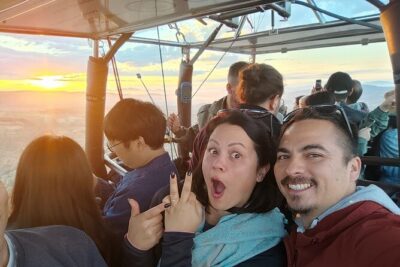
Cappadocia starts with a payoff viewpoint. You’ll begin at Göreme Panorama, one of the best places to get your bearings: fairy chimneys, cave dwellings, and valleys laid out in one sweep. If you’re there in the morning, you may also see hot air balloons rising in the background, which adds motion to a landscape you’ll otherwise freeze-frame with your camera.
From there, the tour shifts from “wow factor” to “why it matters.” Göreme Open Air Museum takes you into a UNESCO World Heritage site with rock-cut churches, monasteries, and frescoes dating back to the 10th century. This is the kind of stop where a guide helps. Even if you love archaeology, the frescoes and layouts feel more meaningful when you understand what early Christian communities were building and using.
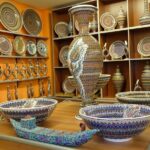
Then it pivots to signature forms. Paşabağ (Monks Valley) is known for its multi-capped fairy chimneys—exactly the shapes people picture when they think of Cappadocia. After that, you’ll keep the variety going with a pottery experience in Avanos (watch artisans work red clay from the Kızılırmak River, and you may try the potter’s wheel if your time allows).
The day closes with Pigeon Valley (quick, scenic, and full of dovecotes carved into volcanic rock) and Uçhisar Castle Panorama, which gives you a higher, wide-angle view. That 10-minute summit stop matters because it helps you mentally map the region before you move to the quieter villages.
Not sure which one yet? These are the Cappadocia tours travellers book first.
- Cappadocia Red Tour,(included,lunch,guide,entrance fees)★ 5.0 · 199 reviews
- Cappadocia: Turkish Bath, Hammam, and Massage★ 4.5 · 99 reviews
- Affordable Hot Air Balloon Ride Over Cat Valley with Hotel Pick-up & Drop-Off★ 3.5 · 72 reviews
- Cappadocia Red Tour (All Included)★ 5.0 · 64 reviews
- Cappadocia: Cat/Ihlara Valley Sunrise Hot Air Balloon Ride★ 4.5 · 60 reviews
Cappadocia beyond the postcard: valleys, monasteries, and Kaymaklı
Day two feels like Cappadocia’s “choose-your-own-depth” day. It starts in Mustafapaşa, also known as Sinasos, where Greek-style stone architecture and quiet streets give you a different flavor than the main Göreme corridor. The pace is lighter here, and it’s a good pause before more physical sites.
Then you head to history that hides in plain sight: Sobesos Ancient City. It’s not a name most people know, and that’s part of the appeal. Instead of only visiting famous ruins, you get a glimpse of an ancient Roman settlement with remnants like mosaics and baths—enough to spark curiosity without turning the day into a long archaeology lecture.
Next is a monastery that often feels like a secret: Keşlik Monastery. Rock-cut churches, ancient frescoes, and stone-carved rooms make this a strong photography stop, too. The tour continues into Soğanlı Valley, which is famous for its fairy chimneys and rock-cut churches—plus the advantage of being calmer than the most famous routes.
Finally, you go underground with Kaymaklı Underground City. You’ll descend into a network of tunnels and rooms carved into soft volcanic rock—storage areas, living spaces, and hiding zones. Even without getting lost in details, this stop changes how you think about “cave dwellings.” It’s not just a romantic idea; it’s a survival architecture system built for real life.
Practical tip: underground stops and church interiors can be cooler, but then you’re outside again fast. Wear layers and expect uneven ground.
Sultanhanı and Konya: the Silk Road stop and Rumi’s center
After the volcanic region, the tour turns toward the inland spiritual and historical heart of Turkey.
You’ll visit Sultanhanı Caravanserai, one of the largest and best-preserved caravanserais from the Silk Road era. This isn’t just an outdoor monument. The scale of the stone halls and courtyards helps you picture traders and travelers resting there, changing animals, and waiting out the next leg of their journey.
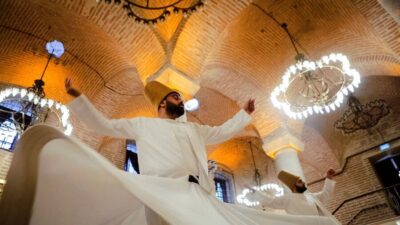
Then you head to Mevlana Museum in Konya, better known as Rumi’s mausoleum. The big feature is the turquoise-tiled dome, plus manuscripts and sacred artifacts. The guide’s job here is especially useful: you’re not only seeing architecture. You’re understanding the ideas behind the Whirling Dervishes—love, tolerance, and how Rumi shaped a whole cultural attitude.
This day is a nice contrast to Cappadocia. It slows the imagination down in a different way: less “formations in rock,” more “beliefs in stone and art.”
Roman ruins on the Turkish Riviera: Perge, Side, and Aspendos
From Konya, the itinerary drops you toward the Mediterranean, where ancient sites sit near modern seaside life.
In Perge Ancient City, you’ll walk through impressive ruins that once formed a thriving Roman city near Antalya. The standout elements include a grand theater, stadium, colonnaded streets, and Roman baths. Even if you don’t consider yourself a hardcore ruins person, the layout gives you an easy sense of how cities were organized: public space, entertainment, and daily movement.
Then comes Side Ancient City, a coastal port town mixing Greek, Roman, and Byzantine influences. You’ll get to see highlights like the Temple of Apollo, the Roman theater, and old city walls, all with the Mediterranean nearby. The combination of sea air and archaeology helps this stop feel less “museum-like.”
The big star is Aspendos Ancient Theater. It’s widely known for being one of the best-preserved Roman theaters in the world, and the acoustics are part of the legend. The tour frames it well: it was built in the 2nd century AD, could seat up to 15,000 people, and it even hosts performances today. That last point matters, because it connects past engineering to present-day use.
If you only have a short attention span for ruins, Aspendos will likely keep you engaged. If you do love theater architecture, it’s one of the most satisfying stops in the entire route.
Kaş, Myra, and Termessos: Lycian sites with a mountain edge
Day five and six shift the focus to the Lycian coast and Taurus Mountains.
In Antalya, you’ll spend time in Kaleiçi (the old town), with narrow streets, Ottoman houses, and the Roman harbor area nearby. It’s not only about the ruins; it’s also about the feeling of old streets and sea-adjacent living. You’ll also be able to see Hadrian’s Gate and use the area as a launching point for understanding Antalya’s layers.
Then comes Kaş, a small seaside town famous for its harbor and easygoing vibe. The itinerary keeps it simple: stroll cobbled streets, enjoy café time, and look toward Lycian rock tombs. For people who want downtime between major monuments, Kaş is a good reset.
Myra Ancient City adds the Lycian anchor. You’ll see rock-cut tombs in the cliffs and a grand Roman theater, and you’ll get a sense of why Myra is one of the more important archaeology stops on this stretch. The stop is long enough (2 hours) that it’s not just a glance.
Finally, Termessos brings the mountain drama. You’ll visit ruins perched high in the Taurus Mountains—one of Turkey’s best-preserved ancient cities. The day includes the theater, agora, temples, and necropolis, plus panoramic views. Because Termessos sits outside the typical coastal flow, it can feel more like an adventure than a scheduled checkpoint.
Wear good shoes here. Steps and uneven rock are common in sites like Termessos, and the views reward your effort.

Pamukkale and Hierapolis: white terraces plus Roman spa city
This is one of those days where you’re guaranteed a visual memory.
You’ll visit Hierapolis Ancient City, a spa city known for its theater, colonnaded streets, and monumental gates. You’ll also explore the necropolis, Roman baths, and temples. Then the tour moves to the signature reason most people plan their route around this area: Pamukkale.
At Pamukkale thermal pools, you’ll see the white travertine terraces formed by mineral-rich thermal waters cascading down the mountainside. The plan includes time to walk barefoot along the natural pools and enjoy the surreal look of the place that’s attracted visitors for thousands of years. The pairing with Hierapolis matters. You’re not only seeing a natural wonder; you’re seeing why the Romans cared about the healing story enough to build a city next door.
Afterward, you’ll continue to Laodicea Ancient City, another major Phrygian center with Roman and Byzantine ruins. You’ll walk areas like colonnaded streets, theater, stadium, and impressive city walls. It’s a useful addition because it helps you see Pamukkale not as a one-off, but as part of a network of ancient urban centers.
If you’re sensitive to crowds or heat, Pamukkale can be busy. Plan your energy accordingly and pace your time on the terraces.
Ephesus and the Christian sites near Selçuk
Ephesus is the kind of place that makes other ruins feel smaller.
You’ll spend time at Ephesus Ancient City, one of the best-preserved Roman cities in the Mediterranean. The itinerary focuses on the marble-paved streets, theaters, the Library of Celsus, temples, and public baths. With a good guide, the scale becomes easier to understand: you’re not just seeing stones; you’re seeing how civic life worked.
Then the tour becomes more reflective with The House of the Virgin Mary near Ephesus. It’s described as a serene, spiritual site believed to be Mary’s final residence. You can wander through the stone house and gardens, and you’ll have time for quiet moments like lighting a candle.
Next is Basilica of St. John in Selçuk, a 6th-century Byzantine basilica tied to the tradition of St. John the Apostle’s burial. Then you have Temple of Artemis—not fully standing, but still powerful because it’s connected to the Seven Wonders idea and gives you context for how monumental worship once was here.
The practical benefit of this day’s structure: you go from civic Rome (Ephesus) to personal faith spaces (house, basilica) to a world-wonder reminder (Artemis). That contrast is what makes the area feel emotionally complete.
Pergamon and Bergama: acropolis views and Asclepius medicine
The route continues with Pergamon Ancient City, known for its acropolis and Hellenistic learning center. You’ll walk steep hillside ruins and see the ancient theater, temples, and the Asklepion healing sanctuary. The panoramic views are a real bonus. They help you understand why this city mattered and how it controlled sightlines.
The tour then focuses on the Asklepion of Pergamon, where visitors in antiquity sought cures. This is medicine as religion and place. You’ll explore temples, treatment halls, and terraces, and your guide will help connect those spaces to what people believed about healing.
Then you’ll visit Red Basilica (Kızıl Avlu) in Bergama—built as a Roman temple and later converted into a Byzantine church. The itinerary also notes its connection to the Seven Churches of Asia idea in the Book of Revelation. Even if that’s not your main interest, the layered use of the building is what’s fascinating. It’s architecture that kept getting repurposed by new eras.
This day is more “intellectual travel.” It’s not just pretty stones. It’s how people in different periods explained the world around them.
Istanbul Old City in two big blocks: Hagia Sophia, Topkapı, and the Bosphorus
You’ll finish the tour in Istanbul, and the schedule is smart about how to split the city.
First comes the Historic Peninsula core. You’ll walk around landmarks on the old city axis, starting with the Hippodrome area, then moving to Hagia Sophia. The tour includes entry so you can see the domes, mosaics, and Islamic calligraphy inside. Even with minimal background, the building’s layered story comes through quickly: Byzantine cathedral, Ottoman mosque, and now a mosque again.
Next is the Blue Mosque, still an active place of worship, with six minarets and the famous interior covered in over 20,000 blue İznik tiles. Then you’ll head to Topkapı Palace, where the itinerary focuses on courtyards, sacred relics, glittering jewelry, and the pavilions. It’s a place designed to impress—so you get a sense of how the Ottoman court projected power.
You’ll also get Grand Bazaar time—45 minutes in a covered market with thousands of shops. This is a good stop for practical shopping if you like spices, carpets, or small souvenirs. Don’t plan to “win” at shopping in 45 minutes. Instead, treat it as a guided orientation to how the market works.
The second Istanbul block includes Dolmabahçe Palace, the lavish 19th-century residence along the Bosphorus, and then a Bosphorus cruise (2 hours). That cruise is an excellent pacing tool. It lets you sit, breathe, and watch Ottoman palaces and waterfront neighborhoods without walking more stones.
To finish, you’ll explore Fener & Balat, the colorful neighborhoods along the Golden Horn. You’ll see historic churches and the Patriarchate area in Fener, and then stroll Balat’s narrow streets with houses, art cafés, and antique shops.
Price and logistics: what $7,689.02 buys you here
At $7,689.02 per person, this is not a deal-you-can-spring-on-a-whim tour. But it’s also not just “paying for a checklist.” You’re buying a lot of built-in cost and time:
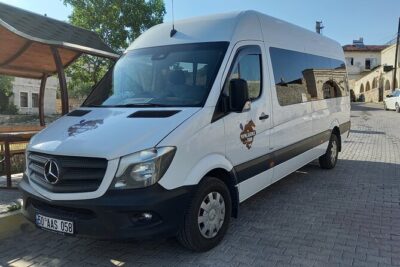
- Air-conditioned vehicle for moving day to day
- Professional guiding across multiple regions
- Parking fees handled
- Entrance fees covered where the schedule lists included admissions
- Lunch (11) included
- 10 nights / 9 days B&B in 4-5 hotels (as described), which is a meaningful chunk of the package
The other big value piece is that you’re doing a private tour, with only your group participating. That’s why the stops can be efficient without feeling chaotic.
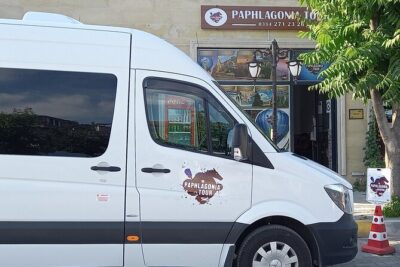
Logistics-wise, pickup is arranged from central Urgüp, and you’ll be contacted via WhatsApp or email with the exact pickup area. The tour uses a mobile ticket, and at the end you’re set up with an Istanbul Airport drop-off transfer. The start and end points listed are in the Cappadocia area and the transfer timing is built into the itinerary.
My practical caution: with this price, you’ll want to be honest with yourself about pacing. If you’re the kind of person who wants to linger for hours, you may feel the schedule’s pressure. If you like getting a guided “map” of Turkey quickly and intelligently, this format can feel worth every dollar.
Should you book this Grand Tour of Turkey?
Book this tour if you want an organized, guided route that covers Cappadocia, Mediterranean Roman sites, Pamukkale, Ephesus, Pergamon, and Istanbul without you stitching plans together yourself. I especially think it fits couples or small groups who like architecture and archaeology but also want someone else to handle transport, timing, and ticketing.
Don’t book it if you want slow travel, lots of free time each day, or deep museum-level pacing at every stop. The itinerary is designed to move, and you’ll see a lot—even when some viewpoints are only brief.
If you do book, do one smart thing: go in knowing which days you’ll treat as your “photo days” (Göreme viewpoints, Pamukkale, Ephesus) and which days you’ll treat as your “learn days” (Sultanhanı, Mevlana, Asklpion). That mindset makes the fast pace feel like a strategy instead of a rush.
FAQ
Is pickup offered for this tour?
Yes. Pickup is offered from the Urgüp starting point, and you’ll be contacted via WhatsApp or email with the exact pickup location.
What language is the tour guide using?
The tour is offered in English.
Is this a private tour?
Yes. It’s a private tour/activity, and only your group participates.
Where does the tour start and where does it end?
It starts at Cumhuriyet, Atatürk Blv. No:35, 50400 Ürgüp/Nevşehir, Türkiye, and it ends with an Istanbul Airport drop-off as stated in the tour details.
Is a mobile ticket provided?
Yes. A mobile ticket is offered for the experience.
How long is the tour?
The tour duration is listed as 12 days (approx.).
What’s included in the price?
Included: an air-conditioned vehicle, parking fees, professional guiding, entrance fees (for sites with included admissions as part of the program), 10 Nights/9 Days B&B accommodation in 4-5 hotels, and lunch (11).
What is not included?
Personal expenses are not included.
What kind of fitness level do I need?
The tour notes a moderate physical fitness level is recommended.
Can I cancel and get a full refund?
Yes. Free cancellation is available up to 24 hours in advance of the experience start time for a full refund.
What if my hotel or flight changes last minute?
The policy provided says changes made less than 24 hours before the experience’s start time are not accepted, so it’s best to plan tightly.
If you want, tell me your travel month and your top 3 priorities (ruins, food, shopping, photography, or religious sites). I can suggest which days you should slow down the most and where you’ll want to be extra alert.
More Tours in Urgup
- Cappadocia Red Tour,(included,lunch,guide,entrance fees)
★ 5.0 · 199 reviews - Cappadocia Red Tour (All Included)
★ 5.0 · 64 reviews - Full Day Cappadocia Green Tour
★ 4.6 · 52 reviews - Top Sites of Cappadocia:Red Tour with Underground City Visit
★ 4.5 · 49 reviews - Cappadocia Red Tour With Göreme Open – Air Museum (Small Group)
★ 5.0 · 35 reviews - Cappadocia Private Tour | 2 Days
★ 5.0 · 34 reviews
More Tour Reviews in Urgup
- Cappadocia Red Tour,(included,lunch,guide,entrance fees)
★ 5.0 · 199 reviews - Cappadocia: Turkish Bath, Hammam, and Massage
★ 4.5 · 99 reviews - Affordable Hot Air Balloon Ride Over Cat Valley with Hotel Pick-up & Drop-Off
★ 3.5 · 72 reviews - Cappadocia Red Tour (All Included)
★ 5.0 · 64 reviews - Cappadocia: Cat/Ihlara Valley Sunrise Hot Air Balloon Ride
★ 4.5 · 60 reviews - Full Day Cappadocia Green Tour
★ 4.6 · 52 reviews
Fresh off the valley trail: our newest Urgup write-ups
Grand Tours of Turkey, compared.
 ★ 5.02 Day All Inclusive Cappadocia Tour from Istanbul with Optional Balloon FlightFrom $725429 reviews
 ★ 4.5Transfer from Kayseri Airport to Cappadocia Hotels (Small Group)From $1589 reviews
 ★ 4.5One way Transfer from Nevşehir Airport to Cappadocia HotelsFrom $1860 reviews
 ★ 5.0Istanbul to Cappadocia: 2-Day All Inclusive Tour + Balloon OptionFrom $1,07455 reviews
 ★ 4.5The Original Dervish Ritual in Konya or CappadociaFrom $5054 reviews
 ★ 5.02 Days – Cappadocia Tour from Istanbul with optional Hot Air Balloon FlightFrom $55028 reviews
 ★ 4.5From Istanbul: 3-Day Cappadocia Highlights Tour by PlaneFrom $64222 reviews
 ★ 4.6Visit to Cappadocia ceramic workshop and carpet storeFrom $3019 reviews
Browse the lists this tour appears in