
Reviewed · CAPPADOCIA HIGHLIGHTS TOURS
Biblical Mysteries of Cappadocia Tour
Cave churches tell stories without a single word. This tour strings together Christian sites and Ottoman-era village remains into one smooth 5-6 hour day, then tops it off with hands-on craft culture in Ortahisar. Mustafapaşa and Soganlı Valley give you that “wait, people actually lived here” feeling.
Two things I really liked: first, the guide quality—Iram was patient, friendly, and great at explaining how these places fit into the bigger story. Second, the pace works. You get several major stops (monastery caves, a Roman city, a church-filled valley) without spending the whole day stuck in transit.
One consideration: this is a moderate-walking experience. You’ll be on uneven ground at village streets, in and around cave churches, and along valley paths, so it helps to have a comfortable baseline level of mobility.
In This Review
- Key highlights you’ll feel right away
- The “biblical mysteries” angle in plain terms
- Mustafapaşa (Synasos): Ottoman-era village bones and an old Greek church
- Keşlik Monastery’s cave churches: St. Michael and St. Stephen
- Sobesos Ancient City: Roman mosaics in Cappadocia
- Soğanlı Valley: 20+ church spaces, frescoes, and pigeon houses
- Ortahisar craft workshops: carpets and leather, not just souvenirs
- Price and logistics: what you’re actually paying for
- Best way to enjoy it: how to prepare for a cave-and-valley day
- Who should book this tour, and who should skip it
- Should you book the Biblical Mysteries of Cappadocia Tour?
- FAQ
- Is hotel pickup included?
- How long is the tour?
- Is the tour offered in English?
- Is lunch included?
- What is included in the price?
- What happens if the weather is poor or the minimum number of travelers isn’t met?
Key highlights you’ll feel right away
- Iram’s guiding style keeps the history clear and the timing comfortable
- Mustafapaşa’s village atmosphere combines architecture with older church remains
- Keşlik Monastery cave complex includes St. Michael and St. Stephen and wall paintings
- Sobesos Ancient City mosaics let you see standout Roman artwork in Cappadocia
- Soğanlı Valley churches and frescoes plus pigeon-house clues from local life
- Ortahisar craft stops show living carpet weaving and leather processing
The “biblical mysteries” angle in plain terms
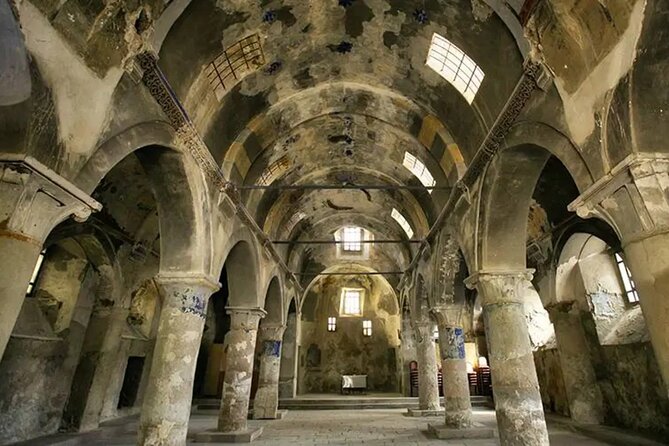
This isn’t a jump-scare, haunted-cave kind of tour. The biblical theme works because the route uses physical places—churches, monastery spaces, and ancient city remains—so the stories feel grounded. What you’re really chasing here is where faith and everyday life overlapped, across centuries.
You’ll also notice the tour’s structure: it moves from village-era atmosphere to cave monasteries, then to Roman remains, then to a valley filled with rock-cut churches, and finally to craft workshops that connect past work to present-day skills. That gives your day a satisfying arc.
And yes, Iram matters. When a guide can translate stone and faded paintings into something you understand fast, the whole day gets better. She managed a calm rhythm that didn’t rush you through the important bits.
The all-in-one Cappadocia days
- Full Day Cappadocia Tour( Red Tour + Underground City )★ 5.0 · 1,862 reviews
- Full Day Cappadocia Red/Green Combined Tour in 1 Day w Lunch★ 4.7 · 1,474 reviews
- Full-Day Private Tour of Cappadocia’s Highlights (Car&Guide )★ 5.0 · 1,399 reviews
- Cappadocia Private Guided Tour(Car&Licensed Guide)★ 5.0 · 615 reviews
- Ultimate Cappadocia Experience: Red & Green Tour in One Day★ 4.7 · 489 reviews
Mustafapaşa (Synasos): Ottoman-era village bones and an old Greek church
You start in Mustafapaşa, a village often linked with the name Synasos from Ottoman years. The point of stopping here is that it’s not just “a place with old buildings.” You’re seeing an area tied to a time when Turks and Greeks lived side by side, and you can still spot the architectural mix in the structures and church remains.
At this stop, you’re typically walking at village pace, looking at the surroundings and taking in the older church you’ll see during the visit. It’s one of the best “warm-up” stops because it sets mood. Before you step into cave rooms and buried stone cities, you get a sense of how people organized daily life here—street, homes, and places of worship all sitting in the same world.
What I like for you: this is ideal if you enjoy slow, visual history—reading the shapes of buildings and understanding how communities worked. The vibe is quieter than the big headline sites, so you can actually pay attention.
What to watch: village streets mean more uneven footing than a smooth museum floor. Wear shoes you’d trust on cobblestones and irregular stone.
Keşlik Monastery’s cave churches: St. Michael and St. Stephen
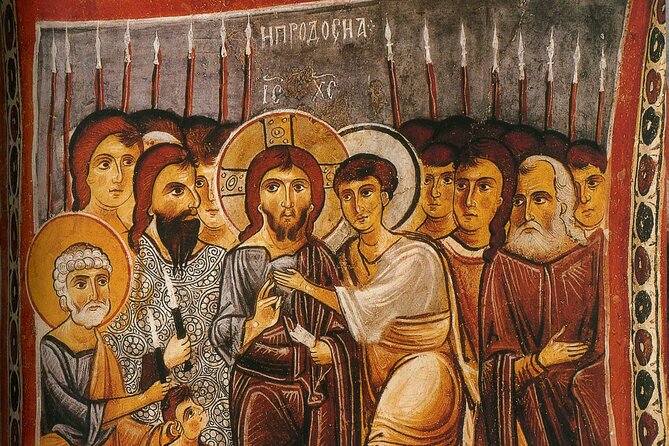
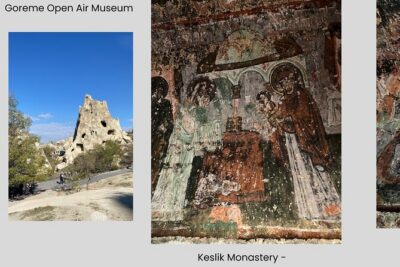
Next comes Keşlik Monastery, an expansive cave monastery complex just outside Ürgüp. The reason this stop feels special is scale and layering. The monastery includes two church areas—St. Michael and St. Stephen—plus cave rooms, and it’s described as a site used across around 2,000 years. You’re not only looking at Christian-era spaces; you’re also seeing how the site kept being used long after earlier people were gone.
The tour focuses on the monastery area and its wall paintings. Even when colors aren’t as sharp as in new restorations, paintings like these help you connect the dots. They make the caves feel less like “dark rooms” and more like lived-in, purposeful places.
I love how this stop also adds a continuity theme. It’s mentioned as having been a gravesite in pre-Christian Roman times. That single detail changes how you experience the complex: it’s not just a later religious site placed on an empty landscape. It’s a place with long memory.
Practical tip for you: cave interiors can feel cooler and dim. Bring a light layer if you run warm outside, and take a moment to let your eyes adjust before you try to read any painted sections. Your guide can help point out what to look for.
Sobesos Ancient City: Roman mosaics in Cappadocia
Then you head to Sobesos Ancient City, near Sahinefendi Village. This is the stop that can surprise you the most, because mosaics are not what most people picture when they hear Cappadocia.
Sobessos was discovered by treasure hunters in 2002, and the tour describes it as the only unique Roman ancient city in Cappadocia where you can see amazing mosaics. That “unique” part is important—not as hype, but because it gives you a different kind of evidence than the rock-cut churches do. Here, you’re looking at Roman artistic work rendered into floor surfaces, telling you about taste, wealth, and daily spaces.
During the visit, the focus is on observing the mosaics and getting information about the region. You’ll get context so the patterns aren’t just decorative. They become part of the story of who lived here and what mattered.
Potential drawback: the viewing time is shorter than the big valley stop. That means you’ll want to be mentally ready to look and listen fast. If you’re the type who wants to study every inch, use the guide moments to prioritize what’s most important.
Soğanlı Valley: 20+ church spaces, frescoes, and pigeon houses
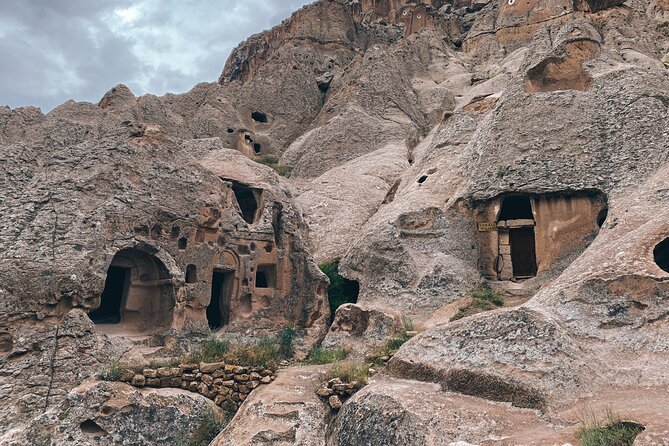
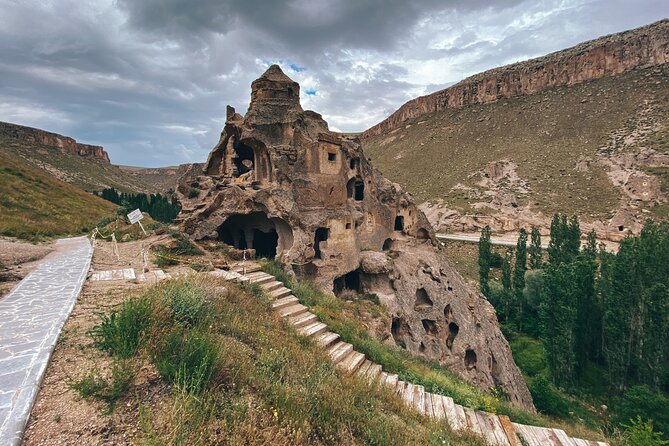
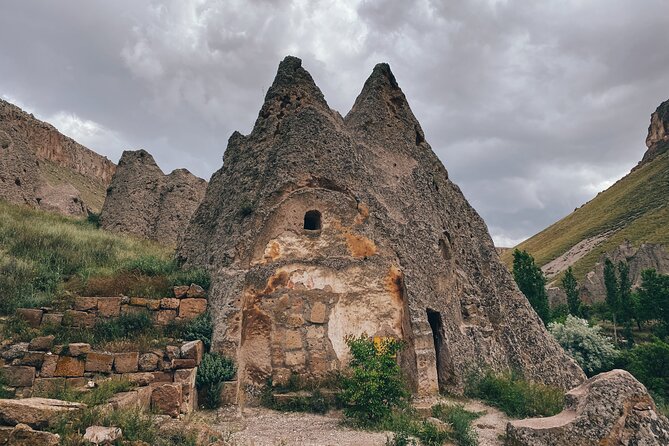
After the monastery, you shift to Soğanlı Valley, a valley packed with monasteries and churches from the 10th century. The tour describes it as an ancient rock-cut village area with over 20 churches, plus Roman-era tombs and hundreds of pigeon houses along the cliffs. That combination is what makes Soğanlı feel different from a single-site stop.
You’ll discover different cave churches and observe frescoes. Frescoes are always fragile, so don’t expect everything to be perfectly bright. Instead, treat them like clues. The value here is seeing how many separate worship spaces exist within one valley system, and understanding how art was used inside those spaces to communicate meaning.
Then there’s the pigeon-house detail. That’s not just a random scenic add-on. It hints at how people used the landscape for practical living needs alongside religious life. You get that “this wasn’t a fantasy set” feeling.
The day also includes time for a lunch break in the valley area. Lunch itself isn’t included, so you’ll want to plan how you’ll eat—grab food where available or bring what you need depending on how the operator handles timing.
Timing note: this is one of your longer moments on the ground (about 1 hour 15 minutes for the church exploration). If you come prepared—good shoes, water, and comfortable expectations—you’ll feel the day click into place.

Ortahisar craft workshops: carpets and leather, not just souvenirs
The final stretch brings you to Ortahisar for hands-on culture stops tied to work people still do. You’ll visit two local workshops: one for carpet weaving and another for leather processing.
At the carpet weaving cooperative, the emphasis is on traditional hand-weaving by local women, using techniques passed down through generations. The tour also connects the craft to the ancient Silk Road, which helps you understand why weaving became such a meaningful trade in the region. This isn’t presented as a museum artifact—it’s ongoing work.
Then you’ll shift to leather. The stop focuses on the leather processing workshop linked to the region’s ties to animal husbandry. You’ll explore the leather factory and see a short fashion show featuring locally produced leather goods.
If you’re wondering whether this will feel like sales pressure: the description given here frames it more as cultural learning—watching production and seeing how craft stays part of daily identity. Still, any workshop with goods to buy will give you the chance to shop, so just decide ahead of time what you want (watching only, or buying a small piece).
Time-wise, this section is shorter (around 40 minutes). You won’t become a craft expert in one stop, but you’ll leave with a clear understanding of how the products are made and why people keep doing it.
Price and logistics: what you’re actually paying for
At $192.66 per person and roughly 5 to 6 hours, this sits in the “worth it if the guide clicks” category. The big reason it can feel good value is that you’re paying for guided access across multiple sites, not just being dropped off in a van.
What’s included:
- Air-conditioned vehicle
- Licensed professional guide fee (that’s the real engine of the day)
- Bottled water
- Guide fee (covered as part of the guiding service)
What’s not included:
- Lunch
- Entrance fees (the tour notes entrance fees are not included overall)
Here’s the practical nuance: some stops list free admission or included tickets for specific areas. Still, because entrance fees are stated as not included, I recommend you treat it as a “check with the provider” situation. In other words, don’t assume every site will be zero-cost on your end—ask for clarity before you go.
Also, it’s a private tour/activity, meaning only your group participates. That can matter a lot in Cappadocia, where timing and walking comfort can make or break the experience. A private format usually means fewer compromises about pace.
You also get pickup from your hotel about 10 minutes before the start time. That’s a real convenience in Göreme, where getting yourself to multiple locations on time can be tricky.
And one last logistics point: the tour is in English, and you receive a mobile ticket. Group discounts are listed too, which is helpful if you’re traveling with friends.
Best way to enjoy it: how to prepare for a cave-and-valley day
This tour is built around stone. That means your comfort comes mostly from footwear, patience, and timing.
- Wear closed-toe shoes with good grip. Cave churches and valley paths can be uneven.
- Bring a light layer. Cave interiors can feel cooler than the sun outside.
- Hydrate. You’ll have bottled water included, but bring extra if you tend to drink a lot.
- Expect a moderate fitness level. You don’t need to be an athlete, but you should be comfortable with some walking and stairs.
Weather matters here too. The tour specifically notes it requires good weather, and if it’s canceled due to poor weather, you’ll be offered a different date or a full refund. That’s important because Cappadocia’s routes can be uncomfortable if conditions are rough.
Who should book this tour, and who should skip it
I think this fits best if you want:
- A guided day focused on churches, monastery caves, and Roman remains
- Clear explanations and a patient, friendly guide like Iram
- A mix of “big sites” and craft culture, without turning the whole day into a shopping trip
You might skip it if you:
- Hate cave interiors and tight, dim spaces
- Want maximum free time at one location instead of a tight, multi-stop loop
- Need guaranteed lunch included (because lunch is not included)
If you’re doing Cappadocia as a first trip and want the “many layers in one day” approach, this tour is a strong contender.
Should you book the Biblical Mysteries of Cappadocia Tour?
Yes—if you like the idea of a structured route that connects Christian sites, Roman traces, and Ottoman-era village atmosphere, this is a smart choice. The quality factor is the guide. Iram’s approach—patient, friendly, and able to explain the story behind each place—makes the difference between seeing ruins and understanding what you’re looking at.
Before you book, do one practical check: confirm how entrance fees are handled for your exact dates, since the overall tour listing says entrance fees aren’t included even though several stops are noted as free or included. That’s not a dealbreaker; it’s just how you avoid surprises.
If your top priority is comfort and guided pacing across several sites in half a day, this tour delivers a lot per hour.
FAQ
Is hotel pickup included?
Yes. Pickup is available from your hotel about 10 minutes before the tour starts.
How long is the tour?
It runs about 5 to 6 hours.
Is the tour offered in English?
Yes, the tour is offered in English.
Is lunch included?
No, lunch is not included.
What is included in the price?
Included items are an air-conditioned vehicle, the licensed professional guide fee, bottled water, and the guide fee.
What happens if the weather is poor or the minimum number of travelers isn’t met?
The tour requires good weather. If it’s canceled due to poor weather, you’ll be offered a different date or a full refund. If it doesn’t meet the minimum number of travelers, you’ll also be offered a different date/experience or a full refund.
More Tours in Goreme
- Cappadocia Sunset ATV Tour
★ 5.0 · 2,984 reviews - Cappadocia: Guided Red Tour with Lunch and Ticket
★ 4.9 · 2,452 reviews - Green (South) Tour Cappadocia (small group) with lunch and ticket
★ 5.0 · 2,317 reviews - Cappadocia: Guided Green Tour with Lunch and Tickets
★ 4.9 · 2,134 reviews - Red (North) Tour Cappadocia (small group) with lunch and tickets
★ 5.0 · 1,975 reviews - Cappadocia: Horseback Riding Adventure Tour
★ 5.0 · 1,881 reviews
More Tour Reviews in Goreme
- Cappadocia Hot Air Balloon Ride / Royal Balloon
★ 5.0 · 6,829 reviews - Cappadocia Hot Air Balloon Ride/ Turquaz Balloons
★ 5.0 · 3,330 reviews - Cappadocia Sunset ATV Tour
★ 5.0 · 2,984 reviews - Cappadocia Sunrise Hot Air Balloon Flight / Discovery Balloons
★ 5.0 · 2,882 reviews - Cappadocia: Guided Red Tour with Lunch and Ticket
★ 4.9 · 2,452 reviews - Green (South) Tour Cappadocia (small group) with lunch and ticket
★ 5.0 · 2,317 reviews
More All-in-One Cappadocia Days
- Full Day Cappadocia Tour( Red Tour + Underground City )
★ 5.0 · 1,862 reviews - Full Day Cappadocia Red/Green Combined Tour in 1 Day w Lunch
★ 4.7 · 1,474 reviews - Full-Day Private Tour of Cappadocia’s Highlights (Car&Guide )
★ 5.0 · 1,399 reviews - Cappadocia Private Guided Tour(Car&Licensed Guide)
★ 5.0 · 615 reviews - Ultimate Cappadocia Experience: Red & Green Tour in One Day
★ 4.7 · 489 reviews - 2 Day All Inclusive Cappadocia Tour from Istanbul with Optional Balloon Flight
★ 5.0 · 429 reviews
Fresh off the valley trail: our newest Goreme write-ups
Cappadocia Highlights Tours, compared.
 ★ 4.6Full Day Cappadocia Red and Green Combined Day TourFrom $223,391 reviews
 ★ 5.0Full Day Cappadocia Tour( Red Tour + Underground City )From $181,862 reviews
 ★ 4.7Full Day Cappadocia Red/Green Combined Tour in 1 Day w LunchFrom $291,474 reviews
 ★ 5.0Full-Day Private Tour of Cappadocia’s Highlights (Car&Guide )From $2291,399 reviews
 ★ 4.8Highlights Tour (Red Tour & Underground City)From $19955 reviews
 ★ 5.0Private Guided Tour(Car&Licensed Guide)From $175615 reviews
 ★ 4.6Full-Day Cappadocia Red Plus TourFrom $68605 reviews
 ★ 4.7Ultimate Cappadocia Experience: Red & Green Tour in One DayFrom $20489 reviews
Browse the lists this tour appears in